
Iron for women: why it matters more than you think
- Iron is the mineral your body uses to carry oxygen. Every red blood cell holds haemoglobin and every haemoglobin molecule binds four iron atoms.
- About 30 percent of women of reproductive age have anemia worldwide. Most iron deficiency in women is driven by menstrual blood loss across years.
- Iron deficiency without anemia is widespread. Ferritin drops months before haemoglobin. Standard tests miss it.
- Vitamin C can boost non-heme iron absorption up to sixfold. Coffee, tea, calcium and phytates all block it. Timing matters as much as dose.
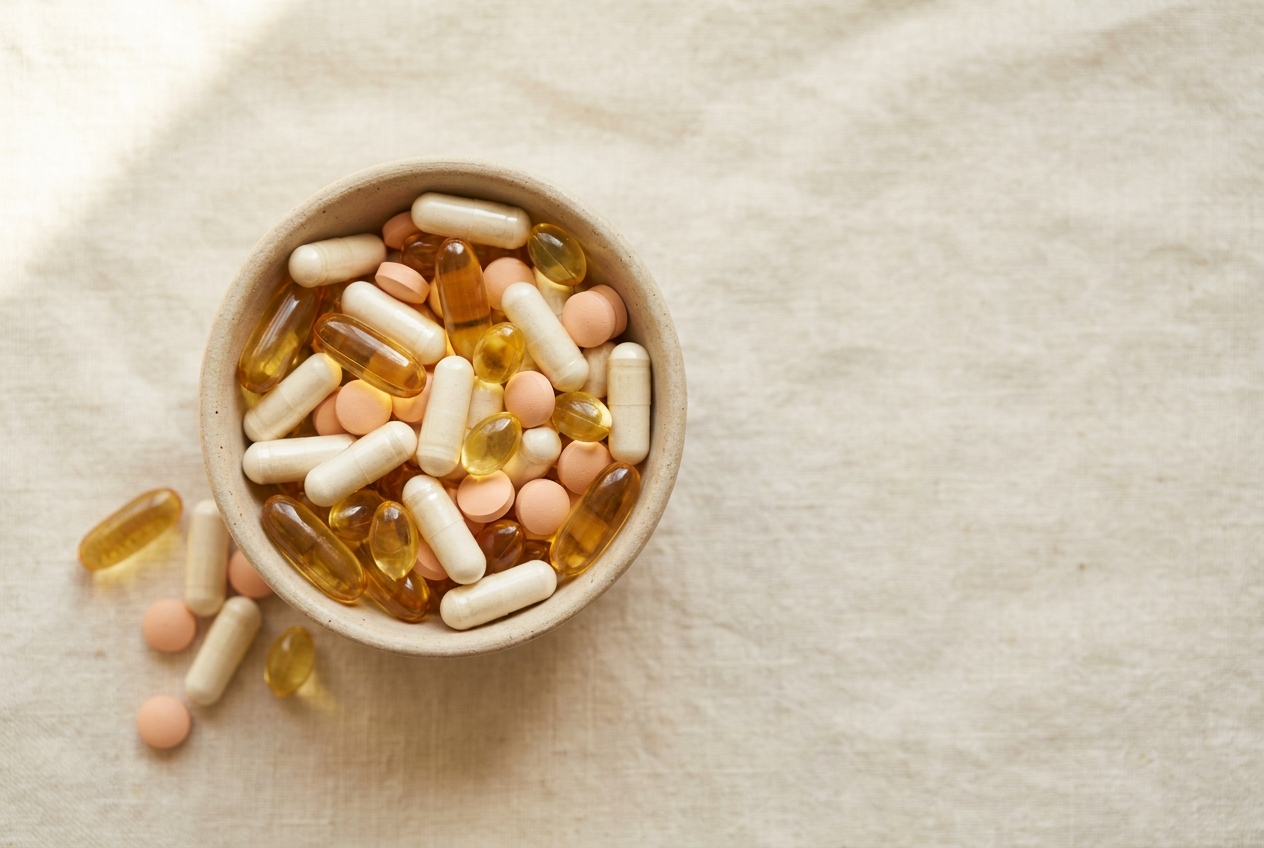
- Iron bisglycinate is gentler and more bioavailable than ferrous sulfate, the cheap default in most pharmacy iron supplements.
You know that fatigue that hits a few days into your period. The kind that no amount of coffee fixes, the kind where climbing a flight of stairs makes your legs heavy, where you brush your hair and watch more strands come out than usual. Most women have been told that's "just tired." Often, it is something more specific: your body is short on iron, and your cycle is part of the reason.
Iron deficiency is the single most common nutrient deficiency in women worldwide, and most women never realize they have it. Globally, around 30% of women of reproductive age have anemia, and roughly two-thirds of those cases come down to a lack of dietary iron [1][2]. That number does not include the much larger group of women who have low iron stores without yet meeting the criteria for anemia. Their blood tests come back "normal." Their symptoms do not.
This article is the women-focused companion to our clinical iron ingredient page. The ingredient page covers forms, doses, and authorised health claims. This one covers why iron matters specifically for you, what the standard reference range gets wrong, and how nōuxx built iron into the menstrual phase of the cycle routine.
- What iron actually does in your body
- Why women lose more iron than men (the actual math)
- The hidden epidemic: iron deficiency without anemia
- Symptoms you might be dismissing
- Why the standard blood test misses it
- How the menstrual phase makes iron especially critical
- How to support your iron status: the levers
- What this means for nōuxx Bloody Berry
- When supplementation makes sense, and when to see a GP
- Common questions
- The bottom line
What iron actually does in your body
Iron is the mineral your body uses to carry oxygen. Every red blood cell contains haemoglobin, and every haemoglobin molecule contains four iron atoms. Without enough iron, your blood literally cannot carry as much oxygen, and every cell in your body feels the difference.
The European Food Safety Authority has reviewed the scientific evidence on iron and authorised the following health claims under EU law [3]:
- Iron contributes to the normal formation of red blood cells and haemoglobin
- Iron contributes to normal oxygen transport in the body
- Iron contributes to normal energy-yielding metabolism
- Iron contributes to the reduction of tiredness and fatigue
- Iron contributes to normal cognitive function
- Iron contributes to the normal function of the immune system
- Iron has a role in the process of cell division
That is six distinct, regulator-approved roles. When iron drops, you do not get a single symptom. You get a cascade. The energy your mitochondria produce falls. The oxygen your muscles receive falls. Your immune response slows. Your concentration drifts. Your hair, which is one of the body's most iron-hungry tissues, starts to shed.
Why women lose more iron than men (the actual math)
Men lose about 1 mg of iron per day through normal turnover. Women of reproductive age lose roughly twice that, because of menstruation.
The classical work on this was done by Hallberg and Nilsson in the 1960s. They developed the alkaline hematin method, still considered the gold standard for measuring menstrual blood loss, and used it to establish that a normal menstrual blood loss is around 30 to 80 mL per cycle, with losses above 80 mL classed as heavy menstrual bleeding [4][5]. With an average haemoglobin concentration of around 12.8 g/dL, that translates to roughly 15 to 30 mg of iron lost per period, or an average of about 0.5 mg per day across the cycle [6].
That sounds small until you compare it to how much iron you actually absorb from food. Even on a good diet, most women absorb only 1 to 2 mg of iron per day. The maths is uncomfortable: if you lose 0.5 mg per day to menstruation on top of the 1 mg per day of baseline turnover, you need to absorb 1.5 mg per day just to stay flat. Many women do not.
The deficit compounds. A few years of slightly inadequate iron intake can quietly empty your iron stores without ever pushing your haemoglobin below the "anemia" threshold.
The hidden epidemic: iron deficiency without anemia
This is the part that gets missed in standard medical practice. Anemia is the last stage of iron depletion, not the first.
Your body has three iron pools: functional iron (in red blood cells), transport iron (in transferrin), and storage iron (in ferritin). When iron intake falls short, ferritin drops first. Only after your stores are exhausted does your haemoglobin start to fall. By that point, you have been iron-deficient for months or years.
The research shows that symptoms appear long before haemoglobin falls. A 2023 review in the journal Hematology by the American Society of Hematology titled "Sex, lies, and iron deficiency" called for changing the ferritin reference ranges used in routine clinical labs, noting that the current lower limits often sit below the threshold at which women experience meaningful symptoms [7].
Studies in non-anemic iron-deficient women have found that recent hair loss is significantly more common at serum ferritin levels at or below 20 μg/L, and restless legs syndrome is significantly more common at ferritin levels at or below 50 μg/L [8]. Both of these can occur in women whose haemoglobin is still in the "normal" range, meaning a standard anemia screen will miss them entirely.
This is iron deficiency without anemia (IDWA), and it is widespread. One analysis estimated that of women presenting with IDWA between the standard laboratory lower limit and 30 ng/mL, nearly two-thirds had no documented diagnosis or treatment [7].
Symptoms you might be dismissing
The symptoms of low iron, especially in the deficiency-without-anemia stage, look like a list of things women routinely write off as "stress" or "getting older":
- Persistent fatigue that does not improve with sleep
- Reduced exercise tolerance, breathlessness on stairs or hills
- Hair shedding that exceeds the normal 50 to 100 strands a day
- Brittle nails, sometimes with spoon-shaped concavity (koilonychia)
- Restless legs at night
- Poor concentration, brain fog
- Pale skin, particularly inside the lower eyelid
- Cold hands and feet
- Pica (cravings for non-food items like ice or clay)
The 2021 study published in the Annals of Hematology on non-anemic iron deficiency correlated specific symptoms with specific ferritin thresholds, giving clinicians a clearer map of when each symptom typically appears [8].
If you recognise three or more of those symptoms and you have regular periods, low iron is worth ruling in or out before chalking it up to stress.
Why the standard blood test misses it
When women report fatigue to their GP, the typical test is a full blood count (FBC), which measures haemoglobin and red cell indices. If those numbers are in the reference range, the patient is told "your iron is fine."
But the FBC does not measure iron stores. To see iron stores, you need a ferritin test, and even when ferritin is measured, the reference range is the problem.
Most labs in Europe use a ferritin lower limit somewhere between 10 and 30 ng/mL. The clinical literature increasingly argues that this is too low. Iron deficiency without anemia is generally defined in research using ferritin thresholds of <30 ng/mL or <50 ng/mL, and symptoms can occur at ferritin levels below 100 ng/mL [7].
A practical takeaway: if you are testing iron status, ask for a full iron panel (ferritin, transferrin saturation, serum iron, and ideally CRP, since inflammation falsely elevates ferritin). Compare your ferritin to the optimal range discussed in the clinical literature, not just to the laboratory lower limit. And remember that "normal" on a lab report often means "not yet anemic" rather than "iron status is good."
How the menstrual phase makes iron especially critical
Iron loss is concentrated in the menstrual phase, which is days 1 to 5 of your cycle, give or take. This is the window where your body is actively losing iron-rich blood and where your iron needs spike sharply.
It is also the window where many women feel their lowest energetically. The drop in oestrogen and progesterone in the late luteal phase already pulls energy down, and then the iron loss in the menstrual phase compounds it. The mood and energy dip that many women experience around days 1 to 3 is partly hormonal and partly haematological.
What happens next is often missed. After the menstrual phase ends, your body needs to rebuild what it just lost. The follicular phase, which follows menstruation, is the window where your body is regenerating red blood cells, restoring oxygen-carrying capacity, and preparing for the energy ramp-up that culminates around ovulation. If your iron status is borderline, that recovery is slower and less complete, and the next cycle starts from a worse baseline.
This is the logic behind cycle-synced iron support: deliver iron when the body is actively losing it and actively rebuilding, not as a constant background dose.
How to support your iron status: the levers
There are four practical levers, and they work together.
1. Dietary iron: heme vs non-heme
Iron in food comes in two forms. Heme iron, found in red meat, poultry, and fish, is absorbed at around 15 to 35% efficiency. Non-heme iron, found in plants like lentils, beans, spinach, fortified cereals, and tofu, is absorbed at only around 2 to 20% efficiency depending on what you eat with it [9].
If you eat little or no red meat, your dietary iron is overwhelmingly non-heme, and absorption becomes the bottleneck.
2. Vitamin C as an absorption enhancer
This is the single most useful trick in non-heme iron nutrition. Vitamin C (ascorbic acid) reduces ferric iron (Fe³⁺) to ferrous iron (Fe²⁺), the form your duodenum actually absorbs, and forms a soluble chelate that keeps iron available in the alkaline pH downstream [10].
The research shows that vitamin C can increase non-heme iron absorption by up to sixfold. A 2014 systematic review and meta-analysis in the Proceedings of the Nutrition Society found that vitamin C consistently and dose-dependently improved iron bioavailability from a wide range of meal types [11]. The practical threshold is around 50 mg of vitamin C per iron-containing meal for a meaningful effect.
This is why nōuxx Bloody Berry pairs iron bisglycinate with vitamin C from acerola.
3. What blocks iron (and what to time around)
Iron absorption is suppressed by several common foods and drinks. The numbers are large enough that timing matters:
- Tea (black or green) can reduce non-heme iron absorption by 41 to 95% through tannins binding iron in the gut [12]
- Coffee has a similar but less pronounced effect, around 39 to 90% reduction depending on dose and timing [13]
- Calcium (dairy, calcium supplements) reduces iron absorption by 18 to 27% when consumed in the same meal [14]
- Phytates in unfermented whole grains and legumes reduce iron absorption significantly, with 250 mg of phytate cutting absorption by up to 82% [14]
The fix is not to cut these foods (many are valuable). The fix is to separate them from iron intake. A practical rule: take iron, or eat iron-rich meals, at least one hour apart from coffee, tea, dairy, and calcium supplements. A 2022 controlled trial in UK women using stable iron isotopes showed that a 1-hour gap between an iron meal and tea consumption substantially attenuated the inhibitory effect [15].
4. The form of iron matters
Not all iron supplements are equal. The cheap default in pharmacies is ferrous sulfate, which delivers iron in a form that is acceptable in absorption but harsh on the gut. Roughly 30 to 50% of women who try ferrous sulfate stop within weeks because of nausea, constipation, abdominal pain, or a metallic taste.
Iron bisglycinate (also called ferrous bisglycinate or Ferrochel) is iron bound to two glycine molecules. The bound form is absorbed by a different pathway than free iron salts, which means it is gentler on the gut and, in clinical trials, two to three times more bioavailable than ferrous sulfate at equivalent doses [16][17]. Some trials in iron-replete populations have shown mixed results compared to higher doses of sulfate , but for the typical European woman with adequate but not high baseline iron, the bisglycinate evidence is favourable.
The trade-off is cost. Bisglycinate is roughly 5 to 10 times more expensive per milligram of iron than sulfate. Most mass-market iron supplements use sulfate. Most women using sulfate do not stick with it.
What this means for nōuxx Bloody Berry
Bloody Berry is the menstrual-phase formulation of the nōuxx cycle routine. It is built on the logic above.
It contains 15 mg of iron as iron bisglycinate, which is 107% of the EU nutrient reference value for adult women. The bisglycinate form was chosen specifically for tolerability and absorption: the goal is not the highest possible dose, it is the dose women can actually take and absorb during the phase when iron loss is highest.
It pairs iron with vitamin C from acerola, because the research is unambiguous that vitamin C is the most effective single enhancer of non-heme iron absorption [11]. It also includes beta-carotene (provitamin A), which has independent evidence of supporting iron utilisation.
It is delivered during days 1 to 5, when your body is actively losing iron and starting to rebuild. Not as a year-round dose, but as a targeted intervention in the phase that needs it most.
This is what cycle-synced supplementation means in practice: the right nutrient, in the right form, at the right phase, paired with the cofactors that make it actually work.
When supplementation makes sense, and when to see a GP
Medical disclaimer. Iron deficiency anaemia is a recognised medical condition that requires diagnosis by a qualified healthcare professional through blood tests including ferritin, haemoglobin and a full iron panel. Nutrition and supplementation can support iron status and help prevent deficiency. They do not replace medical care when anaemia is diagnosed or suspected.
Iron supplementation is appropriate for many women, but it is not always the right first step. A few guidelines:
Consider a nutrition routine like nōuxx if: - You have regular periods and a diet low in heme iron - You recognise mild to moderate symptoms (fatigue, hair shedding, lower exercise tolerance) but no anemia diagnosis - You want preventive support that matches your cycle
See a GP first if: - Your periods are heavier than usual (soaking through a pad or tampon in under an hour, passing large clots, periods lasting longer than 7 days) - Your fatigue is severe or worsening - You have unexplained breathlessness, chest pain, or rapid heartbeat - You have been told you are anemic, or you suspect significant iron deficiency - You are pregnant or planning pregnancy - You have a history of gastrointestinal disease or bleeding
Anemia and heavy menstrual bleeding both deserve clinical investigation. A nutrition routine is a support layer, not a substitute for medical care when symptoms cross into pathological territory.
Common questions
How quickly does iron supplementation work?
Subjective improvements in energy and exercise tolerance often appear within 2 to 4 weeks. Measurable ferritin increases typically take 8 to 12 weeks. Hair regrowth, if low iron is the driver of shedding, can take 3 to 6 months because the hair cycle itself is slow.
Should I take iron every day or every other day?
Stoffel et al. published two open-label randomised controlled trials in Lancet Haematology (2017) showing that alternate-day iron supplementation in iron-depleted women produced significantly higher fractional iron absorption (21.8% vs 16.3%) than consecutive-day dosing. The mechanism: a morning iron dose triggers a hepcidin spike that reduces absorption from a dose given later the same day, and the response persists into the next morning. Allowing hepcidin to return to baseline between doses improves the efficiency of each one. For routine maintenance during menstruation, daily dosing during the phase is reasonable; for treatment of established deficiency, alternate-day protocols are worth discussing with your GP .
Can you have too much iron?
Yes. Iron overload, particularly in people with the haemochromatosis gene variant, is a real risk. Healthy menstruating women without haemochromatosis are extremely unlikely to develop iron overload from a 15 mg daily dose, but supplementation beyond established needs is not advised. If you have a family history of haemochromatosis, get tested before supplementing.
Is heavy menstrual bleeding always pathological?
Not always, but it is worth investigating. Menorrhagia (>80 mL per cycle) can be caused by fibroids, polyps, adenomyosis, clotting disorders, thyroid issues, and several other conditions. If your periods have changed in volume, length, or pain over time, that is a reason to see a gynaecologist.
Why does iron make some women constipated?
Free iron irritates the gut lining and can slow motility. This is particularly true for ferrous sulfate. Iron bisglycinate is significantly better tolerated in the studies, partly because the iron is bound and partly because the absorbed dose is more efficient per milligram swallowed [16].
Do plant-based women always need iron supplements?
Not always, but the risk is higher. Vegetarian and vegan diets rely entirely on non-heme iron, which is less bioavailable. Combining plant iron sources with vitamin C and avoiding tea and coffee around iron meals can close much of the gap. If symptoms persist or a ferritin test confirms low stores, supplementation becomes appropriate.
Should I retest after starting iron?
Yes. A repeat ferritin test 8 to 12 weeks after starting supplementation tells you whether the dose and form are working for you. If ferritin has not moved, the form, dose, or absorption context (timing around tea, coffee, calcium) probably needs adjusting.
The bottom line
Iron deficiency in women is common, under-diagnosed, and easily missed by standard tests. The current reference ranges are built for ruling out anemia, not for protecting your iron status across years of menstruation. If you recognise the symptoms, get a proper iron panel rather than relying on haemoglobin alone, and look at the absorption levers (vitamin C, timing around inhibitors, form of iron) as seriously as you look at the dose.
For preventive support during the phase where iron loss is concentrated, the nōuxx routine pairs 15 mg of iron bisglycinate with vitamin C and beta-carotene in Bloody Berry. The point is not to hit the highest possible number on a label. The point is to deliver an absorbable form of iron, with the cofactors it needs, during the days your body is actively losing and rebuilding.
References
[1] World Health Organization. Anaemia in women of reproductive age (aged 15-49), prevalence (%), by pregnancy status. WHO Global Health Observatory. who.int/data/gho/indicator-metadata-registry/imr-details/4552
[2] Global, regional, and national anemia burden among women of reproductive age (15–49 years) from 1990 to 2021: an analysis of the Global Burden of Disease Study 2021. Frontiers in Nutrition. frontiersin.org/journals/nutrition/articles/10.3389/fnut.2025.1588496/full
[3] EFSA NDA Panel. Scientific Opinion on the substantiation of health claims related to iron (ID 249, ID 1589, ID 250, ID 254, ID 256, ID 251, ID 252, ID 259, ID 253, ID 368) pursuant to Article 13(1) of Regulation (EC) No 1924/2006. EFSA Journal 2009. efsa.europa.eu/en/efsajournal/pub/1215
[4] Hallberg L, Nilsson L. Menstrual blood loss and iron deficiency. Acta Medica Scandinavica 1966. onlinelibrary.wiley.com/doi/abs/10.1111/j.0954-6820.1966.tb02880.x
[5] Hallberg L, Nilsson L. Determination of menstrual blood loss (original alkaline hematin method). PubMed. pubmed.ncbi.nlm.nih.gov/5923385
[6] A simple and feasible questionnaire to estimate menstrual blood loss: relationship with hematological and gynecological parameters in young women. BMC Women's Health 2014. link.springer.com/article/10.1186/1472-6874-14-71
[7] Sex, lies, and iron deficiency: a call to change ferritin reference ranges. Hematology, American Society of Hematology Education Program, 2023. ashpublications.org/hematology/article/2023/1/617/506479/Sex-lies-and-iron-deficiency-a...
[8] Non-anemic iron deficiency: correlations between symptoms and iron status parameters. Annals of Hematology, 2021. pubmed.ncbi.nlm.nih.gov/34811510
[9] Treatment of Iron Deficiency in Women. Mediterranean Journal of Hematology and Infectious Diseases (PMC). pmc.ncbi.nlm.nih.gov/articles/PMC4647225
[10] Effect of ascorbic acid on iron absorption from different types of meals. PubMed (mechanism study). pubmed.ncbi.nlm.nih.gov/3700141
[11] The Regulation of Dietary Iron Bioavailability by Vitamin C: A Systematic Review and Meta-Analysis. Proceedings of the Nutrition Society, Cambridge. cambridge.org/core/journals/proceedings-of-the-nutrition-society/article/regulation-of-...
[12] The mechanism of the inhibition of iron absorption by tea. PubMed. pubmed.ncbi.nlm.nih.gov/1862
[13] Effect of tea and other dietary factors on iron absorption. PubMed. pubmed.ncbi.nlm.nih.gov/11029010
[14] Milman N. A Review of Nutrients and Compounds, Which Promote or Inhibit Intestinal Iron Absorption. Journal of Nutrition and Metabolism, 2020. onlinelibrary.wiley.com/doi/10.1155/2020/7373498
[15] A 1-h time interval between a meal containing iron and consumption of tea attenuates the inhibitory effects on iron absorption: a controlled trial in a cohort of healthy UK women using a stable iron isotope. American Journal of Clinical Nutrition, 2023. sciencedirect.com/science/article/pii/S0002916522026983
[16] Efficacy and Safety of Ferrous Bisglycinate and Folinic Acid in the Control of Iron Deficiency in Pregnant Women: A Randomized, Controlled Trial. Nutrients 2022 (PMC). pmc.ncbi.nlm.nih.gov/articles/PMC8839493
[17] Is a Lower Dose of More Bioavailable Iron (18-mg Ferrous Bisglycinate) Noninferior to 60-mg Ferrous Sulfate in Increasing Ferritin Concentrations While Reducing Gut Inflammation and Enteropathogen Detection in Cambodian Women? A Randomized Controlled Noninferiority Trial. Journal of Nutrition, 2023. (mixed result — context-dependent). sciencedirect.com/science/article/pii/S0022316623722001
[18] Commission Regulation (EU) No 432/2012. Establishing a list of permitted health claims made on foods. eur-lex.europa.eu/LexUriServ/LexUriServ.do?uri=OJ:L:2012:136:0001:0040:en:PDF
[19] Stoffel NU et al. Iron absorption from oral iron supplements given on consecutive versus alternate days and as single morning doses versus twice-daily split dosing in iron-depleted women: two open-label, randomised controlled trials. Lancet Haematology 2017. thelancet.com/article/S2352-3026(17)30182-5/fulltext