

Zinc and your skin: hormonal acne, sebum, and the cycle connection
- Hormonal acne is driven by androgens, particularly dihydrotestosterone, DHT, acting on sebaceous glands.
- Zinc inhibits the 5-alpha-reductase enzyme that converts testosterone to DHT, reducing the conversion by approximately 30 percent at therapeutic doses.
- Clinical trials show oral zinc at 30 to 50 mg per day reduces acne lesion count by approximately 50 percent over 12 weeks, comparable to low-dose antibiotics.
- Zinc also supports skin barrier function, collagen synthesis, wound healing and hair growth.
- Post-pill acne rebound and PCOS-related acne are the two scenarios where zinc has the strongest evidence as an adjunct intervention.
If your skin breaks out the same week of every cycle, that pattern is not random. It is hormonal acne, and it has a specific mechanism (the rise of androgens and the conversion of testosterone to dihydrotestosterone, DHT) that zinc directly affects.
This article is the women-focused, hormone-angle companion to our zinc ingredient page, covering the skin and androgen story the ingredient page does not.
The hormonal acne mechanism
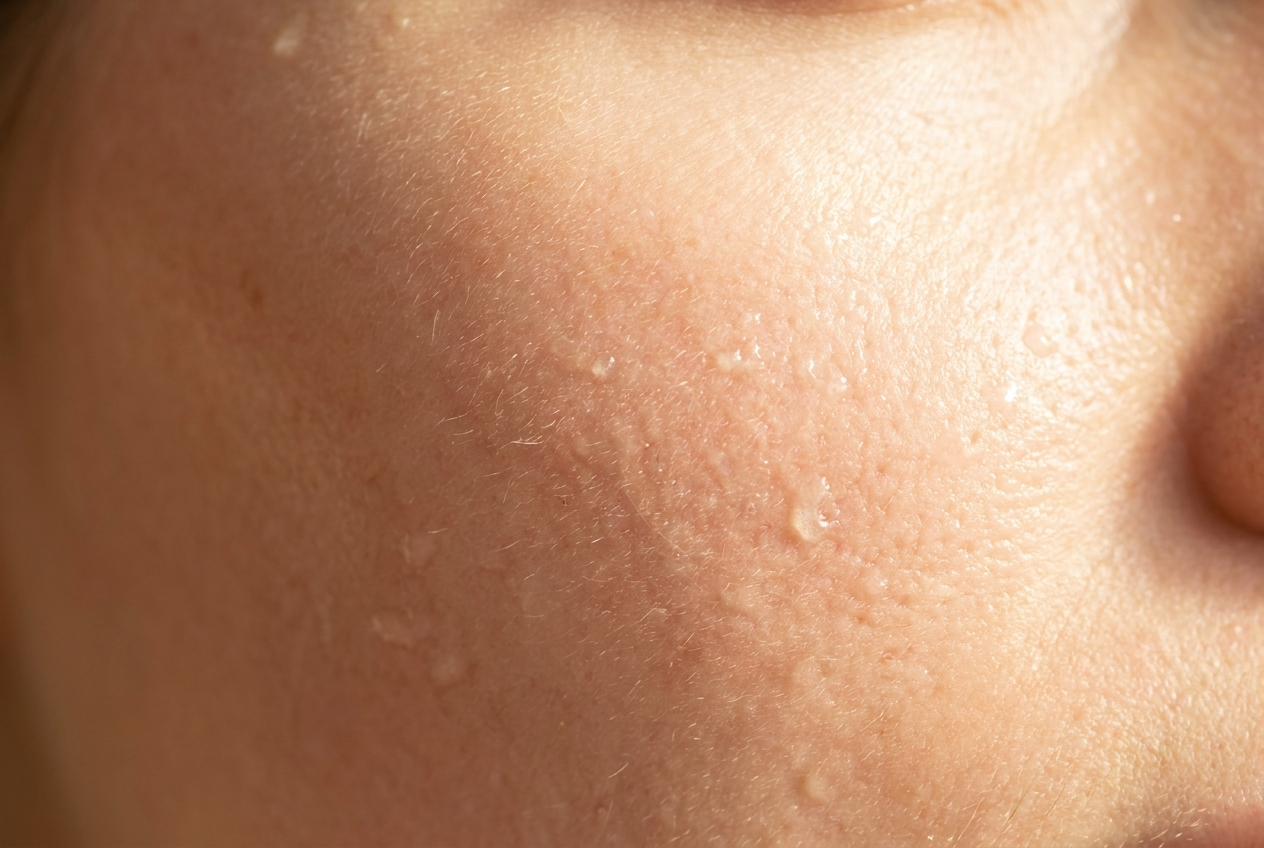
Most adult women's acne is hormonal. The pattern is recognisable: - Breakouts cluster in the late luteal phase (week 4) and during the early menstrual phase - They appear on the lower face, jawline, chin, and sometimes neck - They are often deep, cystic, painful, and slow to heal - They tend to persist into adulthood beyond the typical adolescent acne timeline
The mechanism: androgens (testosterone, DHEA) bind to receptors in sebaceous glands and drive sebum production. The active hormone is not testosterone itself but its converted form, dihydrotestosterone (DHT), produced by the enzyme 5-alpha-reductase. DHT is approximately 3 times more potent than testosterone at the androgen receptor [1].
In the late luteal phase, progesterone falls and the relative balance of androgens shifts upward. DHT-driven sebum production peaks. Sebum mixes with skin cells in the follicle, attracts the Cutibacterium acnes bacteria, triggers inflammation, and produces visible acne lesions.
This is why "premenstrual breakouts" are so consistent across cycles in women with hormonal acne.
How zinc affects this
Zinc has four distinct mechanisms that affect acne:
1. 5-alpha-reductase inhibition
Zinc directly inhibits the enzyme that converts testosterone to DHT. In therapeutic doses, this reduction is approximately 30% [2]. Less DHT means less sebum overproduction, which means fewer clogged follicles, which means less acne formation.
This is the same mechanism that pharmaceutical 5-alpha-reductase inhibitors (finasteride, dutasteride) use, except at much lower potency and with a much better safety profile.
2. Anti-inflammatory effects
Zinc inhibits nuclear factor kappa B (NF-κB), a key transcription factor in the inflammatory cascade, and modulates toll-like receptor 2 (TLR2), which is overactive in acne and drives the conversion of a clogged pore into a red, painful cyst [3]. The anti-inflammatory effect reduces the severity of lesions that do form.
3. Antibacterial activity
Zinc has direct antibacterial effects against Cutibacterium acnes, contributing to the inflammatory-lesion reduction observed in clinical trials.
4. Sebum regulation
Beyond DHT inhibition, zinc directly modulates sebaceous gland activity, reducing overall sebum secretion.
The clinical evidence
A 2013 systematic review of zinc for acne concluded that oral and topical zinc both show evidence of efficacy, with the evidence base rated SORT-B (inconsistent or limited-quality patient-oriented evidence) [4]. The studies that have shown the clearest effects:
- An open-label randomised trial comparing oral zinc to lymecycline (an antibiotic) in 100 patients with acne vulgaris found comparable efficacy with fewer side effects in the zinc group [5]
- Multiple smaller trials show 30 to 50 mg of elemental zinc daily reduces acne lesion count by approximately 50% over 12 weeks - Topical zinc formulations (including zinc oxide nanoparticles) have shown reductions in inflammatory lesion counts and improvements in skin barrier markers in recent trials [6]
The honest summary: oral zinc has reasonable evidence as an adjunct or alternative to antibiotics for mild-to-moderate acne, particularly hormonal acne in adult women. It is not as potent as prescription treatments (isotretinoin, hormonal contraception with anti-androgenic effects), but it has fewer side effects and does not create antibiotic resistance.
Why this matters specifically for adult women
A few reasons hormonal acne in women is increasingly common and increasingly relevant to zinc:
PCOS and androgen excess
Polycystic ovary syndrome is the most common cause of pathologically elevated androgens in women. Vitamin D deficiency is common in PCOS (see our Vitamin D and hormones article); zinc deficiency is also more common in PCOS. Zinc supplementation in PCOS has shown reductions in DHT and improvements in acne, hirsutism, and other androgen-driven symptoms.
Stopping the pill
Combined oral contraceptives suppress androgens and reduce sebum production. Many women experience a significant acne rebound 3 to 6 months after stopping the pill, when natural androgen production resumes. Zinc support during and after the transition off the pill is one of the better-supported nutritional interventions.
Insulin resistance
Insulin resistance (common in PCOS, common in modern Western dietary patterns) drives ovarian androgen production. Zinc improves insulin sensitivity, addressing one of the upstream causes of hormonal acne.
Stress
Chronic stress elevates cortisol and shifts the androgen balance. Zinc supports nervous system regulation alongside its direct hormonal effects.
Other skin effects of zinc
Beyond acne, zinc has documented roles in:
- Collagen synthesis: zinc is a cofactor in collagen-building enzymes, supporting skin structure and wound repair [7]
- Wound healing: zinc deficiency notably slows wound healing; supplementation in deficient individuals improves repair time
- Skin barrier function: zinc supports the integrity of the epidermal barrier, reducing transepidermal water loss
- Hair growth: zinc is essential for keratin synthesis; zinc deficiency is associated with hair shedding (often alongside iron deficiency in menstruating women)
The skin-health benefits of zinc are not limited to women with acne. Anyone with skin barrier issues, slow wound healing, or hair-related concerns has reasons to ensure adequate zinc status.
How much, and what form
The EU Reference Nutrient Intake for zinc is 11 mg/day for women.
Therapeutic doses for acne in trials: 30 to 50 mg/day of elemental zinc. This is well above the RNI but within the EFSA upper limit of 25 mg/day from supplements (note: some clinical trial protocols exceed this). Long-term doses above 50 mg/day risk inducing copper deficiency (see our Vitamin combinations article).
Form: zinc bisglycinate, citrate, picolinate, and acetate are all well-absorbed. Zinc oxide is poorly absorbed (cheap, common in budget supplements). The nōuxx routine uses zinc citrate (7.6 mg per daily dose in Green Glow) for both bioavailability and tolerability.
Pairing: take with food (zinc on an empty stomach causes nausea in many people). Avoid taking with high-dose calcium (competes for absorption). Pair with vitamin B6 for synergistic effects on androgen-related symptoms in PCOS.
Duration: clinical effects on acne typically appear 8 to 12 weeks after starting supplementation. Some women see results sooner; some need longer. Give it at least 12 weeks before deciding it does not work for you.
What this means for the nōuxx routine
The Green Glow variant of the cycle routine contains zinc citrate at a moderate dose appropriate for general support, paired with other nutrients (selenium, CoQ10, L-arginine) that affect skin health, immunity, and the broader ovulatory window.
For women specifically targeting hormonal acne, the routine provides baseline zinc support. For more aggressive intervention (the 30 to 50 mg therapeutic range), additional zinc may be appropriate, ideally under guidance from a clinician familiar with hormonal acne management.
Common questions
Should I take a higher dose of zinc just for my skin?
If you have moderate-to-severe hormonal acne and you have ruled out the major contributing factors (PCOS, stopping hormonal contraception, severe stress, dietary inadequacy), a trial of 30 mg/day of elemental zinc citrate or bisglycinate for 12 weeks is reasonable. Track results. Monitor copper if you continue long-term.
What if my acne does not respond to zinc?
Zinc helps a meaningful subset of women but not all. If 12 weeks of consistent supplementation produces no improvement, the bottleneck is probably elsewhere. Common alternative or additional interventions: hormonal contraception with anti-androgenic progestin (Yaz, Yasmin), spironolactone (an anti-androgen often used for adult female acne), topical retinoids, in severe cases isotretinoin (Roaccutane). These are prescription decisions.
Does zinc help with hair shedding?
Zinc deficiency contributes to hair shedding in some women. The most common scenario is combined iron and zinc deficiency in menstruating women, both contributing to telogen effluvium (diffuse shedding 2 to 4 months after the underlying deficiency). Addressing both nutrients together is more effective than zinc alone.
Can I take zinc when pregnant or breastfeeding?
Zinc is essential in pregnancy (adequate maternal zinc supports fetal growth) and breastfeeding. Standard prenatal supplements contain zinc at appropriate doses. Higher therapeutic doses for acne are not generally recommended in pregnancy without medical guidance.
Does zinc interact with antibiotics?
Yes. Zinc can reduce the absorption of certain antibiotics (tetracyclines, quinolones). If you are on antibiotics, separate zinc by at least 2 to 3 hours.
What about topical zinc for acne?
Topical zinc (zinc oxide, zinc pyrithione, zinc PCA) has its own evidence base, with effects on both inflammatory lesions and sebum control. It can be used alongside oral zinc. Zinc oxide sunscreens have the added benefit of mineral sun protection, which matters since many oral acne treatments increase photosensitivity.
How do I know if I am zinc-deficient?
Serum zinc is not a great deficiency marker (it fluctuates with infection, inflammation, and meals). Symptoms (slow wound healing, frequent infections, hair shedding, loss of taste or smell, white spots on nails) and dietary intake assessment are often more useful than blood testing for clinical zinc deficiency. For most women, ensuring adequate intake from food and a moderate supplement dose is more practical than chasing a specific blood level.
Is zinc safe long-term?
At doses near the RNI (~11 mg/day for women, up to ~25 mg/day from supplements), yes. At higher doses (>50 mg/day) long-term, copper status should be monitored. Excessive zinc can also affect immune function in the opposite direction from supportive (immune impairment at very high doses).
The bottom line
Hormonal acne is driven by androgens, particularly DHT acting on sebaceous glands. Zinc inhibits the enzyme that produces DHT, reduces sebum, calms inflammation, and has direct antibacterial effects on the skin organisms involved in acne. The clinical evidence supports oral zinc at 30 to 50 mg/day of elemental zinc as an effective intervention for mild-to-moderate hormonal acne, with comparable efficacy to low-dose antibiotics and a better side effect profile.
For women with PCOS, post-pill acne rebound, insulin resistance, or stress-driven hormonal symptoms, zinc is one of the better-evidenced nutritional interventions. The nōuxx routine provides baseline support; therapeutic doses for active hormonal acne may require targeted additional supplementation.
Beyond acne, zinc supports skin barrier function, collagen synthesis, wound healing, and hair growth, making it one of the more broadly important nutrients for women's skin and integumentary health.
References
[1] How Zinc Reduces Androgens in Women with PCOS (clinical review of DHT/androgen mechanisms). secondary source; primary literature on 5α-reductase and zinc cited within. oanahealth.com/post/how-zinc-reduces-androgens-women-pcos
[2] Zinc for Hormonal Acne: Dosage and Evidence (clinical mechanism review). secondary; primary 5α-reductase literature: Stamatiadis D et al. Br J Dermatol 1988. healthhighroad.com/womens-health/zinc-hormonal-acne-dosage/78103
[3] Brandt S. The clinical effects of zinc as a topical or oral agent on the clinical response and pathophysiologic mechanisms of acne: a systematic review of the literature. Journal of Drugs in Dermatology : JDD 2013;12(5):542-5. pubmed.ncbi.nlm.nih.gov/23652948
[4] The Clinical Effects of Zinc as a Topical or Oral Agent on the Clinical Response and Pathophysiologic Mechanisms of Acne: A Systematic Review (full text). JDDonline. jddonline.com/articles/the-clinical-effects-of-zinc-as-a-topical-or-oral-agent-on-the-c...
[5] Dréno B, et al. Combination therapy with adapalene-benzoyl peroxide and oral lymecycline in the treatment of moderate to severe acne vulgaris: a multicentre, randomized, double-blind controlled study. British Journal of Dermatology 2011;165(2):383-390. doi.org/10.1111/j.1365-2133.2011.10374.x
[6] Crainic D, et al. Topical Zinc Oxide Nanoparticle Formulations for Acne Vulgaris: A Systematic Review of Pre-Clinical and Early-Phase Clinical Evidence. Biomedicines 2025;13(9). doi.org/10.3390/biomedicines13092156
[7] Rodzik A, et al. Enhancing wound healing with zinc and silver nanocomposites synthesized with β-lactoglobulin: antimicrobial properties, collagen deposition, and systemic effects in a C57BL/6J mouse model. Discover Nano 2024;19(1). doi.org/10.1186/s11671-024-04091-9
[8] Zinc: A Key Mineral in Collagen Synthesis and Wound Repair (clinical review of collagen and wound healing literature). secondary; primary literature on zinc-dependent collagen enzymes is well-established. drinkharlo.com/blogs/collagen-glossary/zinc-a-key-mineral-in-collagen-synthesis-and-wou...
[9] Liu Y, et al. Clinical Efficacy of a Salicylic Acid-Containing Gel on Acne Management and Skin Barrier Function: A 21-Day Prospective Study. Journal of Cosmetic Dermatology 2025;24(7):e70353. doi.org/10.1111/jocd.70353
[10] European Commission. Commission Regulation (EU) No 432/2012 establishing a list of permitted health claims made on foods. Official Journal of the European Union 2012;L 136:1-40. eur-lex.europa.eu/LexUriServ/LexUriServ.do?uri=OJ:L:2012:136:0001:0040:en:PDF
[11] Existing nōuxx zinc ingredient page references (library source). nouxx.com/blogs/ingredients/zinc